
What Is ASNT Level II?
ASNT stands for American Society for Non-Destructive Testing. This organization sets up standard and certification programs in the NDT industry.
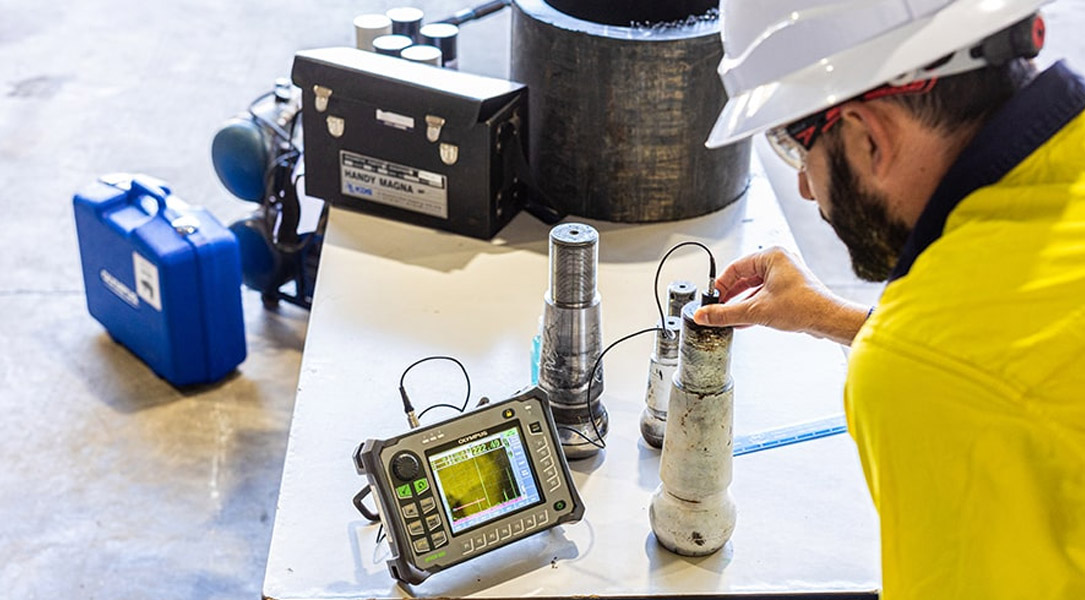
Level II technician performs tests by using testing techniques, such as UT – Ultrasonic Testing, RT – Radiographic Testing, MT – Magnetic Particle Testing, PT – Liquid Penetrant Testing and VT – Visual Testing.
Depending on the method used and requirements of an employer, Level II can setup the equipment, perform inspections, find defects, evaluate results and report about the inspection. In some cases Level II can assist trainees and Level I technicians.
This type of knowledge is necessary in such industries as oil and gas, construction, manufacturing, shipbuilding, aerospace, petrochemical and power generation.
Which Certificate do the Students Get After NDT Training?
After completing a course for ASNT Level II in any training institute, the students usually get a certificate of training or course completion. This is an indication that they have undergone both theory and practical training in certain non-destructive testing techniques.
The importance of such a certificate is that it can be used as evidence of training when applying for employment positions.
Nevertheless, the completion of the training course does not necessarily mean that the trainee is certified or authorized to conduct non-destructive testing alone at an industrial facility.
Full certification could depend on work experience, examination, practical evaluation, eye tests, and certification system approval. This is one of the main aspects that the students should take into account.
What Is an ASNT Level II Certificate?
ASNT offers a Level II NDT certificate program administered by ASNT. Within the scope of this program, applications are made to ASNT directly and training and experience documents are submitted by the candidates.
Additionally, candidates need to pass the required exams.
It is said that according to ASNT, the employer will conduct the hands-on, vision, and position-specific tests before allowing the person to conduct inspection in behalf of the employer.
Only ASNT is authorized to give ASNT certificate. A certificate given by a private NDT training institute cannot be considered to be issued by ASNT directly.
So, students should always check the institution which gives the certificate and have full knowledge about it.
What is Employer Based NDT Certification?
Employer based certification is awarded by the organization employing the NDT technician.
The organization will come up with a procedure that is referred to as written practice. The written practice may be based on any recognized document such as SNT-TC-1A or any other standard like ANSI/ASNT CP-189.
It gives procedures of how the organization shall train, test, qualify and certify their NDT technicians.
Prior to issuing the certification, the employer will look at education qualification of the individual, training, experience, examination performance, skills and vision.
After all the organization's requirements have been met, the employer can then issue the certification of the technician in a particular level and method.
ASNT Level II Certificate vs Employer Certification
An ASNT Level II certificate is granted by ASNT itself and involves the need to satisfy certain training, experience, and examination requirements.
While this type of certification is centrally granted, there still may be certain tests which an employer demands from a technician before granting him/her the right to work.
In contrast to that, an employer-granted certification is granted by an employer following its own written practice.
The required training, experience, and examinations are defined by the employer who grants the right to carry out certain NDT tasks.
These types of certifications are both useful and valid, but their objectives are different.
What Is SNT-TC-1A?
SNT-TC-1A is the name of a recommended practice formulated by ASNT. The practice offers guidelines that companies can follow while formulating their own system for training, qualifying, and certifying NDT personnel.
The common misconception held by students is that ASNT certifies everyone as per SNT-TC-1A.
As per the employer-based system, the organization itself will certify its own personnel according to its written practice, which could be formulated according to SNT-TC-1A.
To put it simply, the guideline is offered through SNT-TC-1A, and the employer formulates the certification process using this guideline.
Are Freshers Eligible to Enroll for an ASNT Level II Course?
Yes, freshers can enroll themselves for the ASNT Level II program. This could be a good career choice for ITI, diploma, BTech, and mechanical engineering students looking towards entering the inspection and quality control industry.
During the course, the learners will get the opportunity to study the basics of NDT, equipment usage, calibration, inspection, identification of defects and reporting.
Following the training, the freshers will be able to start their careers as trainee NDT practitioners or assistants.
This way, they can acquire actual industry experience and prepare themselves for the certification necessary for the job.
It is important that students keep all relevant documentation of their training and experience on record. Fabrication of any experience record will greatly affect their credibility.
Validity of the Employer Certificate After Leaving the Company
Employer-related certificate is generally linked to the respective company issuing the certificate.
When moving from one company to another, the new employer may check the training and experience of the candidate. They may take new tests before granting the authorization to perform NDT procedures.
Previous training and experience are still valuable; however, the authorization of the former employer may not apply to the new workplace.
What Do Employers Check During an NDT Interview?
Employers could verify something beyond just the certificate. They need to know if the candidate has knowledge about the testing method and if he/she is safe while performing the test.
In the interview or during the practical assessment, one would be required to give information about equipment calibration, inspection process, welding defects, interpretation of the indication and the reporting process.
That is why practical NDT training is very important for students.
Someone who knows about equipment and process of inspection performs the process more confidently than those with only theoretical knowledge.
What Should Students Verify before Joining any Training Course?
Before joining any ASNT Level II Course, students must make sure that the institute gives certificates, what all NDT Methods have been taught, and how much practical training has been offered.
Students must also find out if the institute provides information about the requirements of industrial experience and certification by employers.
Freshers can benefit from placement assistance and interview guidance as well.
A good NDT training institute should clearly differentiate between training and certification without giving any false assurances of job authorization after completion of the course.
Which Certification is Good for You?
There cannot be any one definite answer to this because different certifications suit different people based on their experience and employer/project requirements.
For a fresher, the initial task is to undertake quality NDT training and equip yourself with solid practical experience.
Subsequently, the student can start working as a trainee and acquire industrial experience in a supervised manner along with the necessary certification as per the employer requirements.
A formal ASNT Level II certification ensures that there is independent certification of the person under the ASNT certification system.
An employer certification certifies that the person has met the requirements of the employer and he is authorized to undertake certain specific NDT duties.
Knowledge of both these certifications shall help students build up their career without making wrong claims regarding their certification.
Start Your NDT Career With IIT NDT
Industry oriented NDT Training for ITI Pass-outs, Diploma Pass-outs, Engineering Graduates & Working Professionals.
Theory Knowledge + Practical Handling of Equipment + Inspection Procedure + Defect Detection & Career Guidance.
Conclusion
The certificate of an NDT course, the certificate of ASNT Level II and the certificate from an employer are different.
The certificate of the training proves that you've completed the course.
The official certificate of ASNT is provided by ASNT itself after fulfilling their requirements.
Employer certificate is provided by the company based on their practice in writing and permits the technician to work within that company.
For students, the most optimal way of career development is the right training, practical skills and real industrial experience.
Frequently Asked Questions
1. Does completing an ASNT Level II course make me fully certified?
Course completion provides evidence of training. Full certification or job authorisation may also require experience, examinations, practical assessment, vision testing and employer approval.
2. Can freshers join an ASNT Level II course?
Yes. Freshers from ITI, diploma and engineering backgrounds can join NDT Level II training. After training, they can begin gaining supervised industrial experience.
3. Who issues employer-based NDT certification?
The employing company issues it according to its written practice. The employer’s NDT Level III normally plays an important role in the qualification and certification process.
4. Is employer certification valid when I change companies?
It may not transfer automatically. A new employer can review your previous records and require fresh examinations or practical assessments before authorising you to work.
5. Is practical training important for an NDT career?
Yes. Practical training helps students learn equipment setup, calibration, testing, defect identification and report preparation. These skills are often evaluated during job interviews and practical assessments.